7 Reasons Why Cats Should Never Eat Dog Food
Cats and dogs may share the same home, but their nutritional needs are very different. Many pet owners wonder if it is safe for cats to eat dog food. While an occasional bite may not cause immediate harm, regular feeding of dog food to cats can lead to serious health problems. Understanding why cats cannot thrive on dog food helps ensure their long-term well-being.
Contents
- Can Cats Eat Dog Food
- 1. Cats Are Obligate Carnivores
- 2. Lack of Taurine in Dog Food
- 3. Inadequate Protein Levels
- 4. Missing Vitamin A
- 5. Insufficient Arachidonic Acid
- 6. Risk of Malnutrition
- 7. Short-Term Curiosity, Long-Term Danger
- What Should Cats Eat Instead?
- Meow Mix Original Choice Dry Cat Food
- FAQs About Cats and Dog Food
Can Cats Eat Dog Food

1. Cats Are Obligate Carnivores
Unlike dogs, which are omnivores, cats are obligate carnivores. This means their bodies are designed to survive mainly on meat. Dog food often contains grains, vegetables, and fillers that are not essential for cats. Over time, this imbalance can leave cats deficient in vital nutrients.
2. Lack of Taurine in Dog Food
Taurine is an essential amino acid that cats cannot produce in large amounts. It plays a key role in heart health, vision, and reproductive function. While cat food is enriched with taurine, dog food usually lacks enough of it. A taurine deficiency in cats may cause blindness, dilated cardiomyopathy, or even premature death.
3. Inadequate Protein Levels
Cats require higher levels of protein than dogs to maintain muscle mass and energy. Dog food is formulated with lower protein content to meet canine needs. Feeding a cat dog food regularly could result in muscle weakness, lethargy, and poor coat quality.
4. Missing Vitamin A
Vitamin A is another nutrient critical for feline health. Cats cannot convert beta-carotene from plants into vitamin A, unlike dogs. Therefore, they must obtain preformed vitamin A directly from animal sources. Since dog food may not provide enough, cats eating it could suffer from skin problems, weak immunity, or night blindness.
5. Insufficient Arachidonic Acid
Cats depend on arachidonic acid, a type of fatty acid, for proper skin condition, reproduction, and kidney health. Dog food often lacks this essential fat because dogs can make it themselves. Without enough arachidonic acid, cats risk developing dry skin, poor coat texture, and inflammatory issues.
6. Risk of Malnutrition
Even if a cat occasionally snacks on dog food, making it a daily diet leads to nutritional gaps. Malnutrition does not always appear suddenly but develops gradually. Over time, cats may lose weight, show poor growth, or experience organ-related health concerns.
7. Short-Term Curiosity, Long-Term Danger
Cats may be curious about dog food because of its smell or texture. A small nibble might not harm them instantly, but constant access increases the risk of serious deficiencies. Sticking to cat-formulated diets is the safest choice for their lifelong health.
What Should Cats Eat Instead?
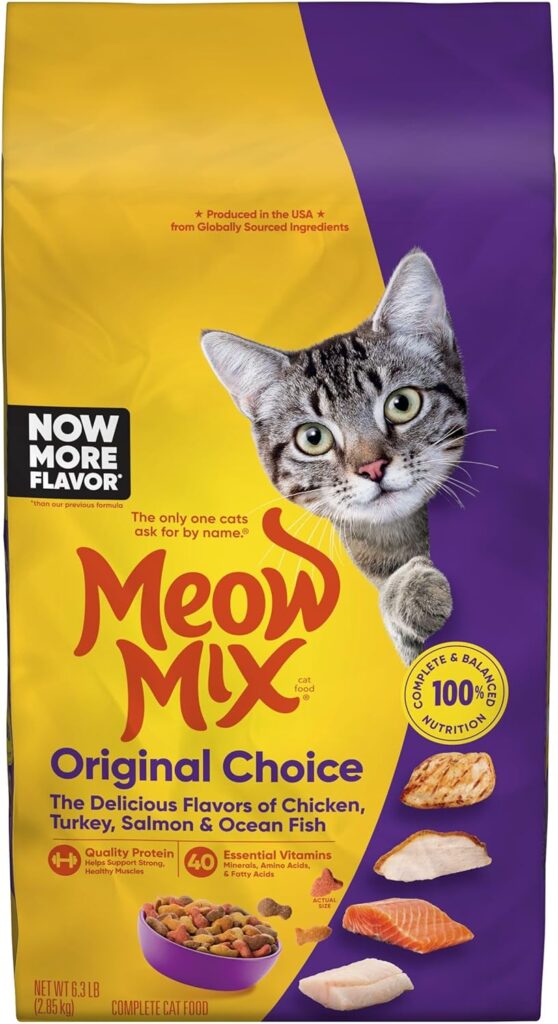
Give A Gift to Your Cat
Meow Mix Original Choice Dry Cat Food
Best Seller Item on Amazon
High-quality cat food that meets AAFCO (Association of American Feed Control Officials) standards ensures balanced nutrition. A diet rich in animal protein, taurine, fatty acids, and essential vitamins supports strong muscles, healthy skin, and a long life. Fresh water should always be available, and treats must be offered in moderation.