7 Surprising Facts: Are Cats Smarter Than Dogs?
The age-old debate about whether cats are smarter than dogs continues to spark curiosity among pet lovers. Both animals show impressive abilities, yet their intelligence works in very different ways. Understanding how each species thinks, learns, and adapts can help reveal the answer.
Contents
Are Cats Smarter Than Dogs

1. Brain Structure and Neuron Count
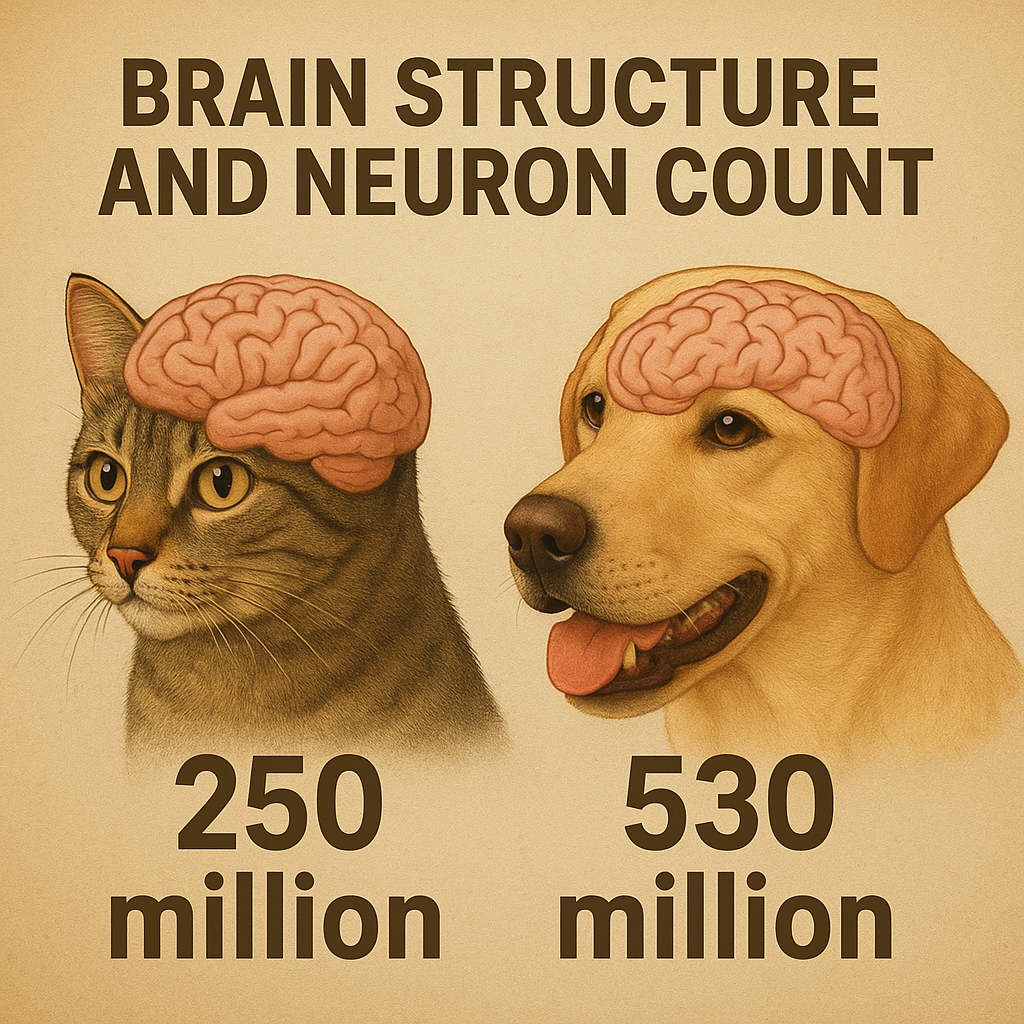
A major factor in intelligence is the number of neurons in the cerebral cortex—the part of the brain linked to learning, memory, and decision-making. Studies show that cats have around 250 million neurons, while dogs have about 530 million. This suggests dogs may have an advantage in processing complex tasks, although neuron count alone does not define overall intelligence.
2. Problem-Solving Skills

Cats are natural problem solvers when it comes to hunting and navigating tricky environments. They often work independently, using observation and stealth to achieve their goals. Dogs, on the other hand, excel in cooperative problem-solving, often working alongside humans to complete tasks.
3. Memory and Learning Ability

Feline memory is known for its long-term strength, particularly in remembering locations, routines, and past experiences. Dogs tend to have better short-term memory for commands and can adapt quickly to new training methods. The difference lies in the way each species stores and uses information.
4. Social Intelligence
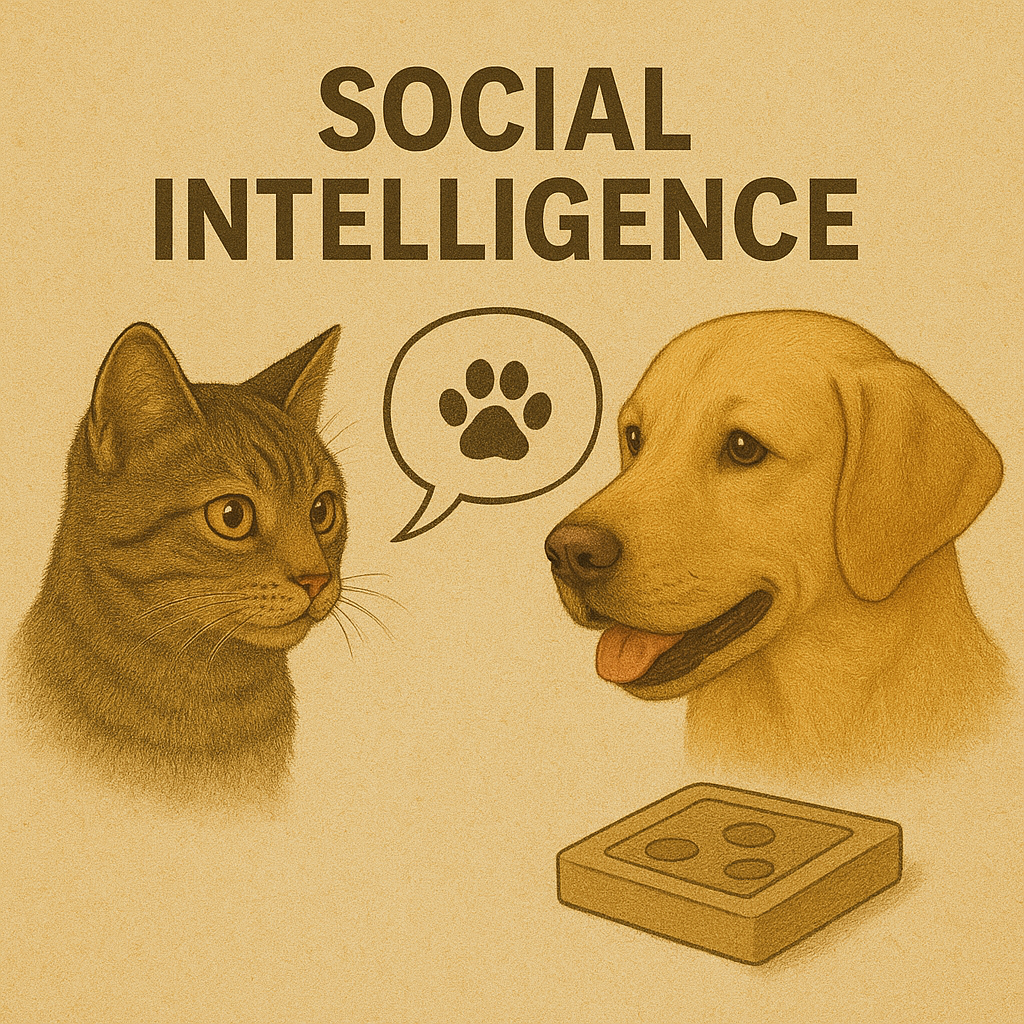
Dogs are highly social animals that read human emotions and body language with remarkable accuracy. This skill makes them excellent companions for therapy, service, and rescue work. Cats also recognize their owners’ voices and moods, but they respond in a more subtle and selective manner.
5. Communication Skills

Both species communicate well, but in different ways. Dogs use a wide range of vocalizations, body postures, and facial expressions to convey needs. Cats rely on a mix of meows, purrs, tail movements, and ear positions, often adjusting their behavior depending on their human’s reactions.
6. Adaptability to Change

Dogs often adjust more easily to new environments, routines, and social settings. Cats can be highly adaptable too, but they usually prefer stability and familiar surroundings. This difference is tied to their evolutionary backgrounds—dogs as pack animals and cats as solitary hunters.
7. Independent vs. Cooperative Thinking

One of the biggest contrasts between cats and dogs is how they approach challenges. Cats prefer independent thinking, making decisions without relying on human guidance. Dogs often look to their owners for direction, showing a cooperative style of intelligenc.
Final Verdict: Which Is Smarter?
The answer depends on how intelligence is measured. Dogs may outperform cats in social cooperation and task execution, while cats excel in independence, memory, and self-reliance. Both species are highly intelligent in their own unique ways, and their strengths reflect their evolutionary paths.