7 Surprising Facts About Whether Cats Are Colorblind
Many cat owners wonder if their furry companions can see the world in the same colorful way humans do. The belief that cats only see in black and white is one of the most common myths about feline vision. While cats do not see colors exactly like humans, they are not completely colorblind either. Their eyes work differently, and understanding this difference can give a deeper insight into how they interact with their surroundings.
Contents
- Are Cats Colorblind
- 1. Cats Are Not Totally Colorblind
- 2. Their Vision is Similar to Some Colorblind Humans
- 3. Cats Have More Rod Cells for Night Vision
- 4. Movement is More Important Than Color for Cats
- 5. Bright Colors May Not Attract Them Like Humans Expect
- 6. Their Eyes Have a Wider Field of View
- 7. Lighting Changes How Cats See Colors
- How This Knowledge Helps Cat Owners
- FAQs About Cats and Colorblindness
Are Cats Colorblind
1. Cats Are Not Totally Colorblind
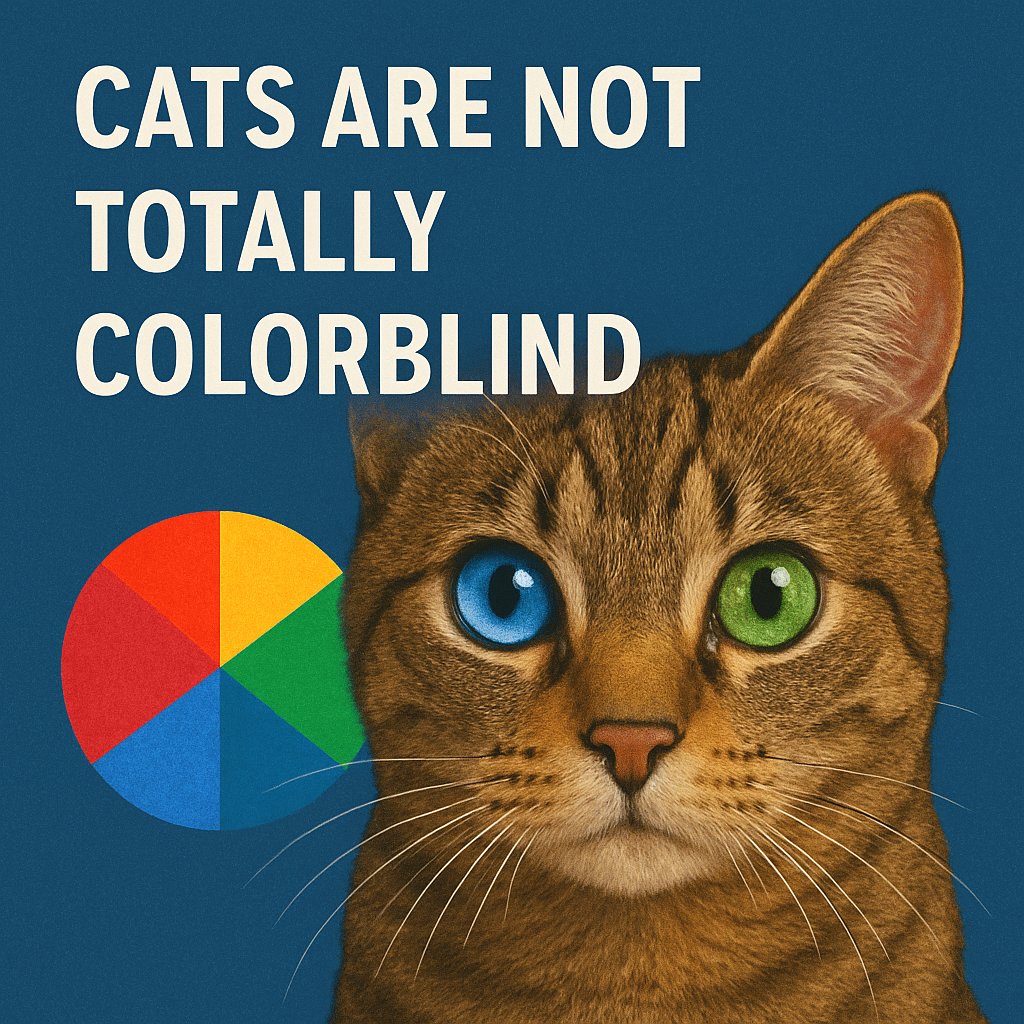
Cats can detect certain colors, but their range is limited compared to humans. They see mostly shades of blue and green. Reds and pinks appear more like gray or brown to them, while purple may look like another shade of blue.
2. Their Vision is Similar to Some Colorblind Humans
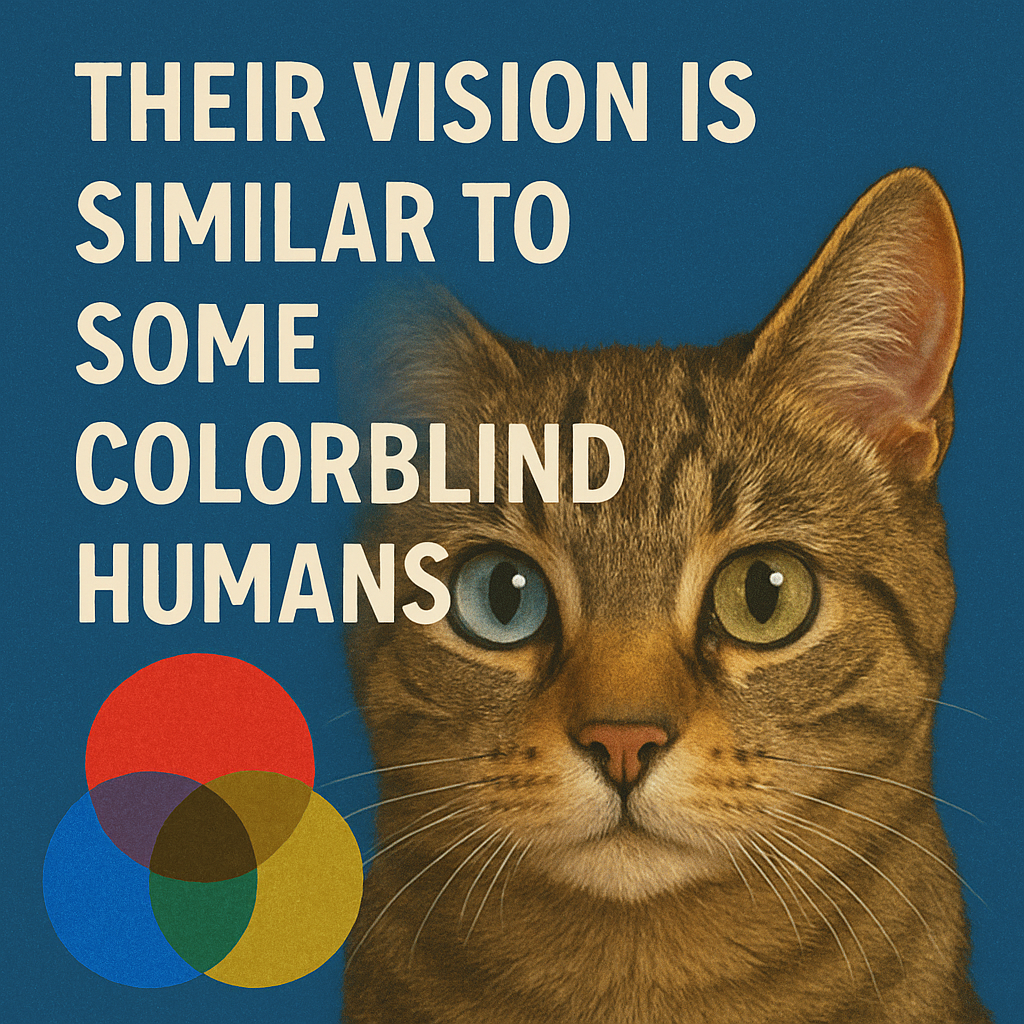
In humans, red-green colorblindness means difficulty in distinguishing between reds, greens, and certain browns. Cats have a similar limitation. They possess fewer color-detecting cells (cones) in their retinas, which reduces their ability to distinguish these colors clearly.
3. Cats Have More Rod Cells for Night Vision

Although their color range is smaller, cats excel in low-light vision. Their eyes are packed with rod cells, which are responsible for detecting movement and seeing in dim light. This adaptation makes them excellent hunters at dawn and dusk.
4. Movement is More Important Than Color for Cats

When hunting or playing, cats rely more on detecting motion than identifying specific colors. Their sharp ability to notice even the slightest movement gives them an advantage in catching prey.
5. Bright Colors May Not Attract Them Like Humans Expect
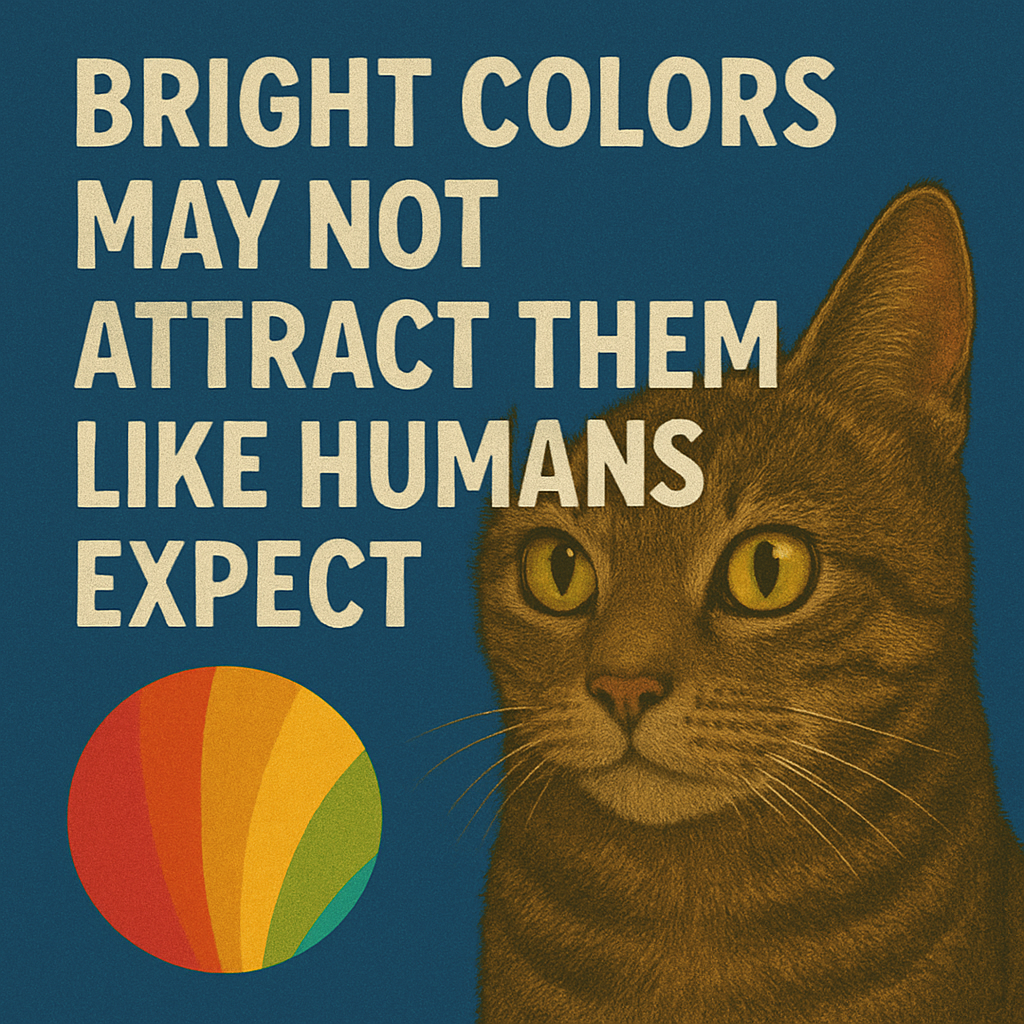
Many cat toys come in bright red or orange, but to a cat, these may not stand out as much. Toys in blue or green shades are more noticeable for them and can sometimes hold their attention better.
6. Their Eyes Have a Wider Field of View

A cat’s eyes are positioned to give them a broader field of vision—around 200 degrees compared to a human’s 180 degrees. This helps them detect movement from the sides, an essential skill for survival in the wild.
7. Lighting Changes How Cats See Colors
In bright daylight, cats can perceive their limited colors more clearly. However, in low light, their vision shifts toward detecting movement and shades of gray rather than focusing on color differences.
How This Knowledge Helps Cat Owners
Understanding a cat’s vision can improve the way toys, play areas, and even home décor are chosen. Opting for colors cats can see, such as blues and greens, may increase their interest in interactive play. Knowing that motion is more important than color can also help in designing engaging activities.